In a nutshell
- Your gut contains tens of trillions of microbes — on the order of the number of human cells in your body — mostly in the colon.
- Gut microbes ferment fibre into short-chain fatty acids, support the gut lining, and help train the immune system.
- Diets rich in fibre and a variety of plants are associated with a more diverse microbiome; fermented foods may also increase diversity.
- Every person’s microbiome is different, and scientists can’t yet define a single ‘healthy’ microbiome.
- Consumer microbiome tests and many supplements make claims that current evidence doesn’t support.
What “microbiome” means
Microbiota refers to the microorganisms living in a particular environment — in this case, your gut. Microbiome strictly refers to their collective genes, though the two terms are often used interchangeably. Microbiomes exist on the skin, in the mouth, in the vagina and elsewhere, but the gut microbiome is by far the largest and most studied.
The idea isn’t new — scientists have known for over a century that the gut is full of bacteria. What changed in the past two decades is technology: DNA sequencing made it possible to identify microbes that can’t be grown in a lab. Large efforts such as the NIH’s Human Microbiome Project mapped the microbes found in healthy people and opened up the field.
The microbes in your gut
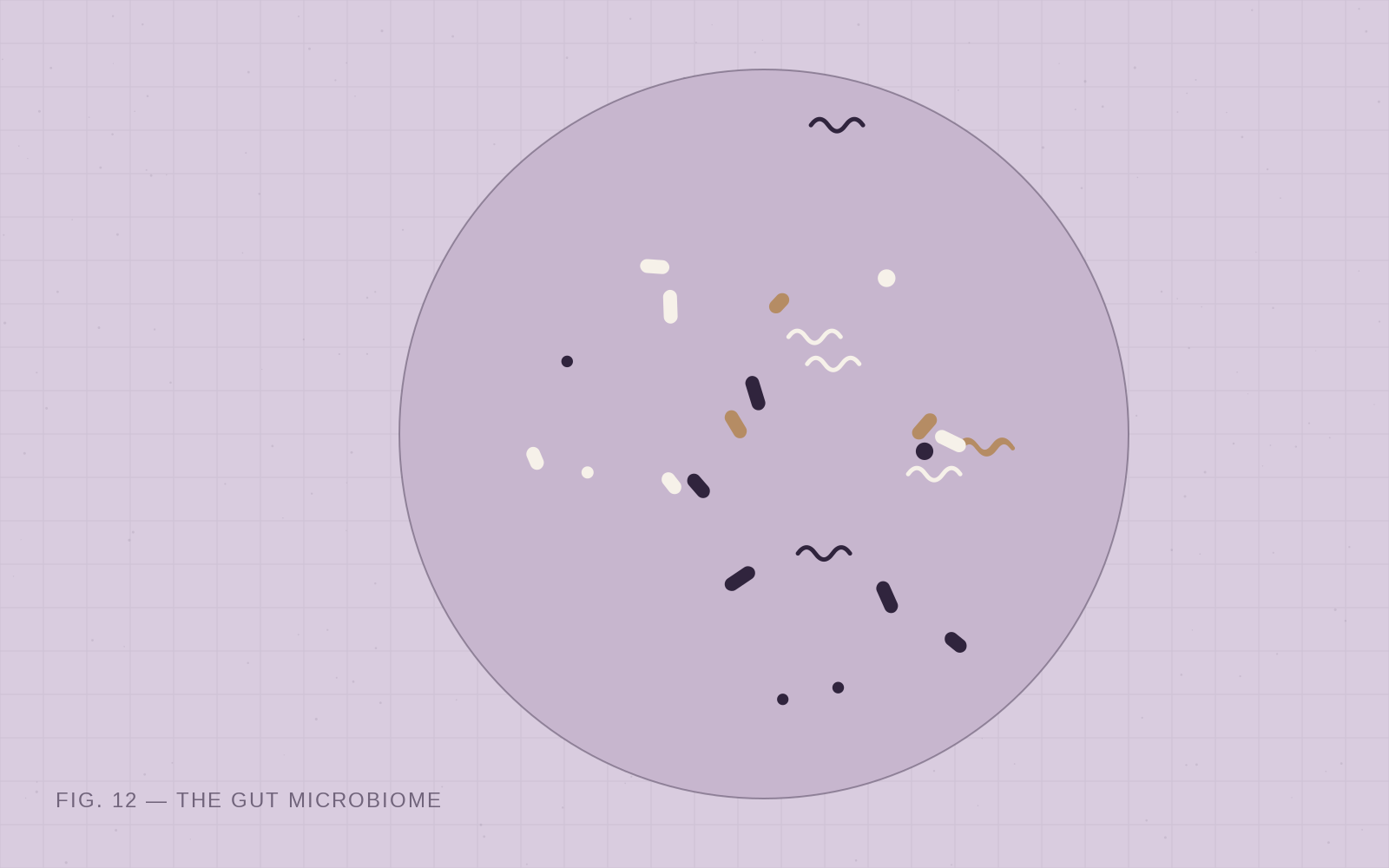
Your gut microbiome includes:
- Bacteria — the majority, from hundreds of species in any one person.
- Archaea — single-celled organisms, some of which produce methane.
- Fungi, including yeasts.
- Viruses, mostly bacteriophages that infect bacteria.
How many? A widely cited 2016 analysis estimated that a typical adult carries about 38 trillion bacteria, roughly comparable to the number of human cells in the body. Most live in the colon, where conditions are low in oxygen and food residues move slowly. The stomach and upper small intestine have far fewer microbes because of acid and faster transit.
What gut microbes do
- Ferment fibre. Humans lack enzymes to digest many plant fibres. Microbes break them down, producing short-chain fatty acids (SCFAs) such as acetate, propionate and butyrate. Butyrate is the main fuel for the cells lining the colon, and SCFAs have effects on gut barrier function, inflammation and metabolism.
- Train the immune system. Much of the immune system sits along the gut. Exposure to microbes, especially early in life, helps it learn to distinguish harmless from harmful.
- Protect against pathogens. An established microbial community competes with harmful microbes for space and nutrients — called colonisation resistance.
- Make some vitamins. Gut bacteria produce vitamin K and some B vitamins, though how much the body uses from colonic production is limited.
- Transform other compounds — including some medicines, bile acids and plant polyphenols — in ways that can change their effects.
Diversity and individuality
Two features come up constantly in microbiome research:
Diversity. A greater number and evenness of species is generally associated with health, and lower diversity has been observed in several conditions, including inflammatory bowel disease and obesity. But diversity isn’t automatically good in every context, and it’s an imperfect summary.
Individuality. Each person’s microbiome is distinct — even identical twins differ. It’s shaped by how you were born, early feeding, where you live, what you eat, medicines you’ve taken, and more. That makes it hard to define what a “normal” or “healthy” microbiome should look like.
Food and the microbiome
Diet is one of the most powerful influences on the gut microbiome that we can change. Shifts in diet can alter microbial composition within days, although long-term patterns matter most.
Fibre
Fibre is the main food for colonic microbes. Diets high in fermentable fibre — from pulses, whole grains, millets, vegetables, fruit, nuts and seeds — supply the raw material for SCFA production. Some fibres that selectively feed beneficial microbes are called prebiotics. Read more in our fibre guide.
Plant variety
In the American Gut Project, a large citizen-science study, people who reported eating more than 30 different plant types a week had more diverse gut microbiomes than those eating 10 or fewer. This is an observational association, not proof that 30 is a magic number — but it supports the general advice to eat a variety of plant foods. Different dals, grains, vegetables, fruits, nuts, seeds, herbs and spices all count.
Fermented foods
Fermented foods such as curd, kefir, kimchi, idli and dosa batter, kanji and sauerkraut can contain live microbes. In a 10-week randomised study at Stanford published in 2021, adults who ate around six servings of fermented foods a day showed increased microbiome diversity and reduced markers of inflammation. A high-fibre diet in the same study didn’t increase diversity over that timeframe, though it changed other measures. The study was small, and more research is needed, but it’s an intriguing signal.
Not all fermented foods contain live microbes — see Prebiotics, probiotics and postbiotics explained.
Other dietary factors
Diets low in fibre and high in ultra-processed foods are associated with less diverse microbiomes. Some food additives, such as certain emulsifiers and non-sugar sweeteners, have shown effects on gut microbes in laboratory and early human studies; the relevance to everyday intake is still being studied.
Lifestyle influences
- Antibiotics can substantially disrupt the microbiome; most communities recover over weeks to months, though not always completely. Antibiotics are essential when needed — the point is to use them only when they’re necessary.
- Birth and early life — birth mode, breastfeeding and early exposures shape the infant microbiome.
- Age — the microbiome changes across life, particularly in infancy and older age.
- Physical activity, sleep and stress have all been linked with microbiome differences, though causation is hard to establish.
- Medicines beyond antibiotics, such as proton-pump inhibitors and metformin, are associated with microbiome changes.
What science knows — and what remains uncertain
Microbiome marketing
Because the science is exciting and the public is interested, the microbiome has become a marketing magnet. Be cautious with:
- Direct-to-consumer microbiome tests. They can describe which microbes are in a stool sample, but there’s no agreed standard for what a healthy result looks like, and personalised diet or supplement recommendations based on them aren’t well validated.
- “Gut reset” or “gut cleanse” products. There’s no evidence that the gut needs resetting or cleansing in healthy people — and some products contain laxatives.
- Supplements promising broad benefits — weight loss, glowing skin, mood — from probiotic blends that haven’t been tested for those outcomes.
The most reliable “microbiome diet” is also the most boring: plenty of fibre, a variety of plant foods, some fermented foods if you enjoy them, and fewer ultra-processed foods.
Frequently asked questions
How can I improve my gut microbiome?
Eat more fibre from a variety of plant foods — pulses, whole grains, millets, vegetables, fruits, nuts and seeds — include fermented foods such as curd if you enjoy them, limit ultra-processed foods, and use antibiotics only when prescribed.
How long does it take to change the gut microbiome?
Some changes can appear within days of a big dietary shift, but long-term composition reflects habitual diet over months and years.
Is a microbiome test worth it?
For most people, not yet. Tests can describe the microbes present, but scientists can’t yet translate results into reliable personal recommendations.
Do probiotics permanently change the microbiome?
Most probiotic strains don’t permanently colonise the gut; they tend to pass through, and their numbers decline after people stop taking them. Effects, where they exist, are strain-specific.
What foods are good for gut bacteria?
Fibre-rich foods such as dal, rajma, chana, oats, barley, millets, onions, garlic, bananas, vegetables and fruit, plus fermented foods like curd, kefir and traditionally fermented batters.
Is the gut microbiome linked to mental health?
Research on the “gut–brain axis” shows communication between the gut and brain, and microbiome differences have been observed in some mental health conditions. Whether changing the microbiome can improve mental health in people is still being studied.
Key terms in this guide
Sources and references
We link to original research, official guidance and authoritative reviews. Read more about how we evaluate evidence.
- Human Microbiome Project. NIH Common Fund
- The Microbiome. Harvard T.H. Chan School of Public Health, The Nutrition Source
- Revised estimates for the number of human and bacteria cells in the body. Sender R, Fuchs S, Milo R, PLOS Biology (2016)
- Role of the gut microbiota in nutrition and health. Valdes AM et al., The BMJ (2018)
- Gut-microbiota-targeted diets modulate human immune status. Wastyk HC et al., Cell (2021)
- American Gut: an open platform for citizen science microbiome research. McDonald D et al., mSystems (2018)
How to cite this guide
NourishDecoded Editorial Team. “What Is the Gut Microbiome? A Beginner-Friendly Guide.” NourishDecoded. Published 22 November 2026; updated 22 November 2026. https://nourishdecoded.com/gut-health/gut-microbiome/