In a nutshell
- Start with the serving size — every number on the panel depends on it, and manufacturers choose it.
- Compare products per 100 g (or 100 ml) to put them on equal footing.
- Look at energy, added sugars, saturated and trans fat and sodium to limit, and at fibre and protein to get enough of.
- Ingredients are listed by weight, largest first; several sugars or refined flours near the top tell you a lot.
- Treat front-of-pack claims (‘multigrain’, ‘no added sugar’, ‘baked not fried’) as marketing until the panel confirms them.
Why food labels are worth two minutes
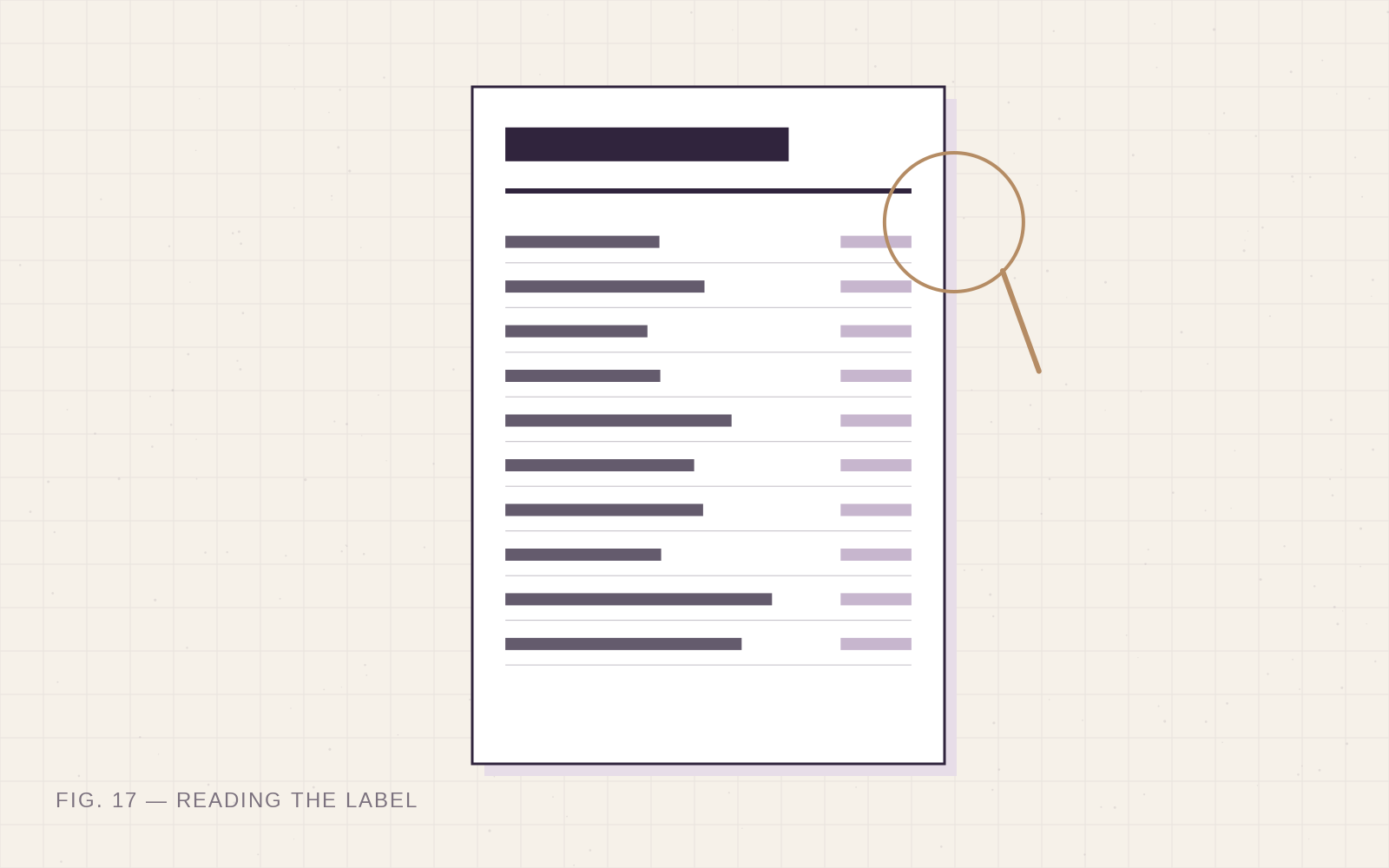
Food labels are one of the few places where manufacturers must give you standardised, regulated information. Packaging fronts are designed to sell; the nutrition panel and ingredient list are designed — by law — to inform.
Labels can’t tell you whether a food is “healthy”. That depends on how much you eat, how often and what else you eat. But they can tell you what you’re getting, help you compare similar products quickly and help you spot added sugar, salt and certain fats that are easy to miss.
What’s on a label in India
Packaged foods sold in India must follow the Food Safety and Standards (Labelling and Display) Regulations, 2020, enforced by FSSAI. Among other things, labels carry:
- Name of the food and a list of ingredients in descending order of weight.
- Nutritional information, typically per 100 g or 100 ml (and often per serve): energy, protein, carbohydrate, total sugars and added sugars, total fat, saturated fat, trans fat, cholesterol and sodium, among others.
- The vegetarian (green) or non-vegetarian (brown) symbol.
- Allergen declarations for common allergens.
- Date marking — “use by” or “best before” — along with batch and manufacturing details.
- The FSSAI licence or registration number.
Many labels also show how much a serve contributes to a reference daily intake. Regulations are periodically amended, and front-of-pack nutrition labelling has been under discussion in India, so details may change — check FSSAI for the current rules.
Other countries use different formats. US labels show “% Daily Value”; UK labels often use colour-coded “traffic light” panels on the front of pack. The principles below apply to all of them.
Step 1: Check the serving size
Every per-serving number depends on the serving size, which the manufacturer chooses. A packet of chips might list nutrition for a 20 g serving — when most people eat the whole 50 g packet.
Ask: how much do I actually eat? If you’ll eat two servings, double every number. If the pack is a single portion, look at the per-pack values.
Step 2: Compare per 100 g
To compare two similar products — two breakfast cereals, two packets of namkeen, two yogurts — use the per 100 g (or per 100 ml) column. It’s the only way to compare like with like when serving sizes differ.
Step 3: Look at energy
Energy is listed in kilocalories (kcal) and sometimes kilojoules (kJ). Energy isn’t good or bad in itself; it tells you how much fuel the food provides. Foods with a lot of energy per 100 g (fried snacks, biscuits, chocolate, nuts) are easy to overeat in some cases and valuable in others — a handful of nuts is energy-dense and nutrient-rich.
Step 4: Check the nutrients to limit
Sugars and added sugars
Total sugars includes sugars naturally present in milk (lactose) and fruit as well as sugars added during manufacturing. Added sugars is the more useful line for most decisions, because WHO recommends limiting free sugars — added sugars plus those in honey, syrups and fruit juice — to under 10% of energy intake, and ideally under 5%. On a 2,000 kcal day, 10% is about 50 g.
A plain curd will show some sugar (lactose) and no added sugar. A flavoured yogurt might show 12–15 g of total sugar per 100 g, most of it added.
Fat, saturated fat and trans fat
Total fat matters less than type of fat. Look at saturated fat, which WHO recommends limiting to under 10% of energy, and trans fat, which should be as close to zero as possible. Words such as “partially hydrogenated” in the ingredients signal industrial trans fats, even when a small per-serving amount is rounded down. India has set a limit of 2% industrial trans fat in oils and fats.
Sodium and salt
Indian labels list sodium in milligrams. To estimate salt, multiply sodium by 2.5 (1,000 mg sodium ≈ 2.5 g salt). WHO recommends adults consume less than 2,000 mg of sodium (about 5 g salt) a day. Instant noodles, namkeen, papad, pickles, sauces, soups and processed meats can be high.
| Per 100 g (UK front-of-pack reference) | Low | High |
|---|---|---|
| Total fat | 3 g or less | More than 17.5 g |
| Saturated fat | 1.5 g or less | More than 5 g |
| Total sugars | 5 g or less | More than 22.5 g |
| Salt | 0.3 g or less | More than 1.5 g |
These UK thresholds aren’t Indian regulation, but they’re a transparent, published reference you can use for context. Drinks use lower thresholds.
Step 5: Check the nutrients to get enough of
Look for dietary fibre and protein. When comparing breads, atta blends, cereals or snacks, higher fibre per 100 g usually indicates more whole grain. Protein matters in foods marketed as breakfasts or snacks — and is a useful counterweight to “protein” marketing claims, which can appear on products with modest amounts.
Step 6: Read the ingredient list
The ingredient list is often more revealing than the panel.
- Order matters. Ingredients are listed by weight, from most to least. If sugar or refined wheat flour (maida) comes first, that’s the main ingredient.
- Sugar has many names. Sucrose, glucose, dextrose, glucose syrup, invert sugar, maltodextrin, corn syrup, fruit juice concentrate, honey and jaggery are all forms of sugar. Several listed separately can add up to a lot.
- Check the flour. “Wheat flour” on its own usually means refined flour; whole wheat flour (atta) or whole grains should be named as such.
- Look at the fats. Palm oil, vanaspati and “hydrogenated vegetable fat” are common in biscuits, snacks and bakery products.
- Allergens are declared — important for anyone with food allergies.
Step 7: Decode the claims
Claims on the front of a pack must follow regulations, but they can still mislead by emphasising one feature.
| Claim | What to check |
|---|---|
| “Multigrain” | May contain small amounts of several grains in a refined-flour base. Check ingredients and fibre. |
| “No added sugar” | May still be high in natural sugars (fruit juice, dates). Check total sugars. |
| “Baked, not fried” | May still be high in fat, salt or refined flour. Check the panel. |
| “Low fat” / “Lite” | Fat may be replaced with sugar or starch. Check sugars and energy. |
| “High protein” | Compare protein per 100 g with simple foods such as dal, curd or chana. |
| “Made with real fruit” | Fruit may be a small percentage. Check the ingredient list and any declared percentage. |
Practical supermarket examples
- Namkeen vs roasted chana. Many namkeens are high in fat and sodium per 100 g; plain roasted chana is typically higher in protein and fibre with little added fat. Neither is forbidden — the label shows you the trade-off.
- Flavoured yogurt vs plain curd. Compare added sugars. Plain curd with fruit gives you control.
- Atta blends. Compare fibre and ingredients — “with goodness of” may mean small amounts of the named grain.
- Ready-to-eat curries and instant noodles. Sodium per pack can approach or exceed half the WHO daily limit. Check the per-pack value, not just per serve.
You can practise with our Food Label Decoder, which converts any panel to per-100 g values and explains each line.
Common mistakes
- Ignoring serving size, then underestimating how much sugar or salt you’ve eaten.
- Judging by one nutrient — a low-fat product can be very high in sugar.
- Trusting front-of-pack claims without checking the panel.
- Confusing total and added sugar — fruit and milk products naturally contain sugar.
- Forgetting drinks — juices, flavoured milks and soft drinks can supply a lot of sugar quickly.
Frequently asked questions
What should I look at first on a food label?
The serving size. Then compare products per 100 g, check added sugars, saturated fat and sodium, and read the first few ingredients.
How do I convert sodium to salt?
Multiply sodium in grams by 2.5. For example, 800 mg sodium is 0.8 g × 2.5 = 2 g of salt.
Is "sugar-free" the same as healthy?
No. Sugar-free products may use sweeteners and can still be high in fat, refined flour or energy. Look at the whole panel.
What does the green or brown symbol on Indian packs mean?
A green dot in a green square indicates a vegetarian food; a brown triangle (formerly a brown dot) in a brown square indicates a non-vegetarian food, as required by FSSAI.
Are "best before" and "use by" the same?
No. “Use by” relates to safety — don’t eat food after this date. “Best before” relates to quality; food may still be safe after it if stored correctly, though texture and flavour can decline.
Why do two labels for similar foods look so different?
Different serving sizes, rounding rules, recipes and formats. Comparing per 100 g removes most of the confusion.
Try the related tools
Key terms in this guide
Sources and references
We link to original research, official guidance and authoritative reviews. Read more about how we evaluate evidence.
- Amendments to the Food Safety and Standards (Labelling and Display) Regulations, 2020. Food Safety and Standards Authority of India (FSSAI)
- How to Understand and Use the Nutrition Facts Label. US Food and Drug Administration
- Food labels. NHS
- Front of pack nutrition labelling guidance. UK Department of Health and Social Care
- Guideline: Sugars intake for adults and children. World Health Organization (2015)
- Sodium reduction — fact sheet. World Health Organization
How to cite this guide
NourishDecoded Editorial Team. “How to Read a Food Label: A Step-by-Step Guide.” NourishDecoded. Published 22 November 2026; updated 22 November 2026. https://nourishdecoded.com/food-science/food-labels/