In a nutshell
- Plan around a template — a grain or millet, a protein, vegetables and something fresh — rather than a fixed menu.
- Spend 60–90 minutes once or twice a week on components: cooked dal or beans, chopped vegetables, a grain, a chutney.
- Cool and refrigerate cooked food promptly; most leftovers keep 3–4 days in the fridge; eat cooked rice within 24 hours.
- Keep a backup shelf — frozen vegetables, eggs, paneer, besan, oats, canned beans — for nights when plans fall apart.
- Cooking changes some nutrients, but no common method ‘destroys’ them; short, low-water methods retain the most vitamins.
Why plan at all?
On busy days, decisions are the bottleneck. When there’s nothing ready and no plan, convenience foods and takeaways win — not because people don’t care about eating well, but because they’re tired. Planning moves the decisions to a calmer moment.
A good plan also saves money and reduces waste, because you buy what you’ll use. And it makes balance easier: when you plan a week at a glance, it’s obvious if you’ve forgotten vegetables or relied on the same protein every day.
A planning framework that works
Rather than planning 21 unique meals, plan around a meal template and rotate the ingredients.
The four-part template
Every main meal includes:
- A grain or starch — rice, roti, millets, oats, poha, bread, potatoes.
- A protein — dal, rajma, chana, eggs, paneer, tofu, fish, chicken, curd.
- Vegetables — at least one cooked and, where possible, something raw.
- A “lift” — chutney, raita, pickle in small amounts, a squeeze of lemon, herbs, toasted seeds.
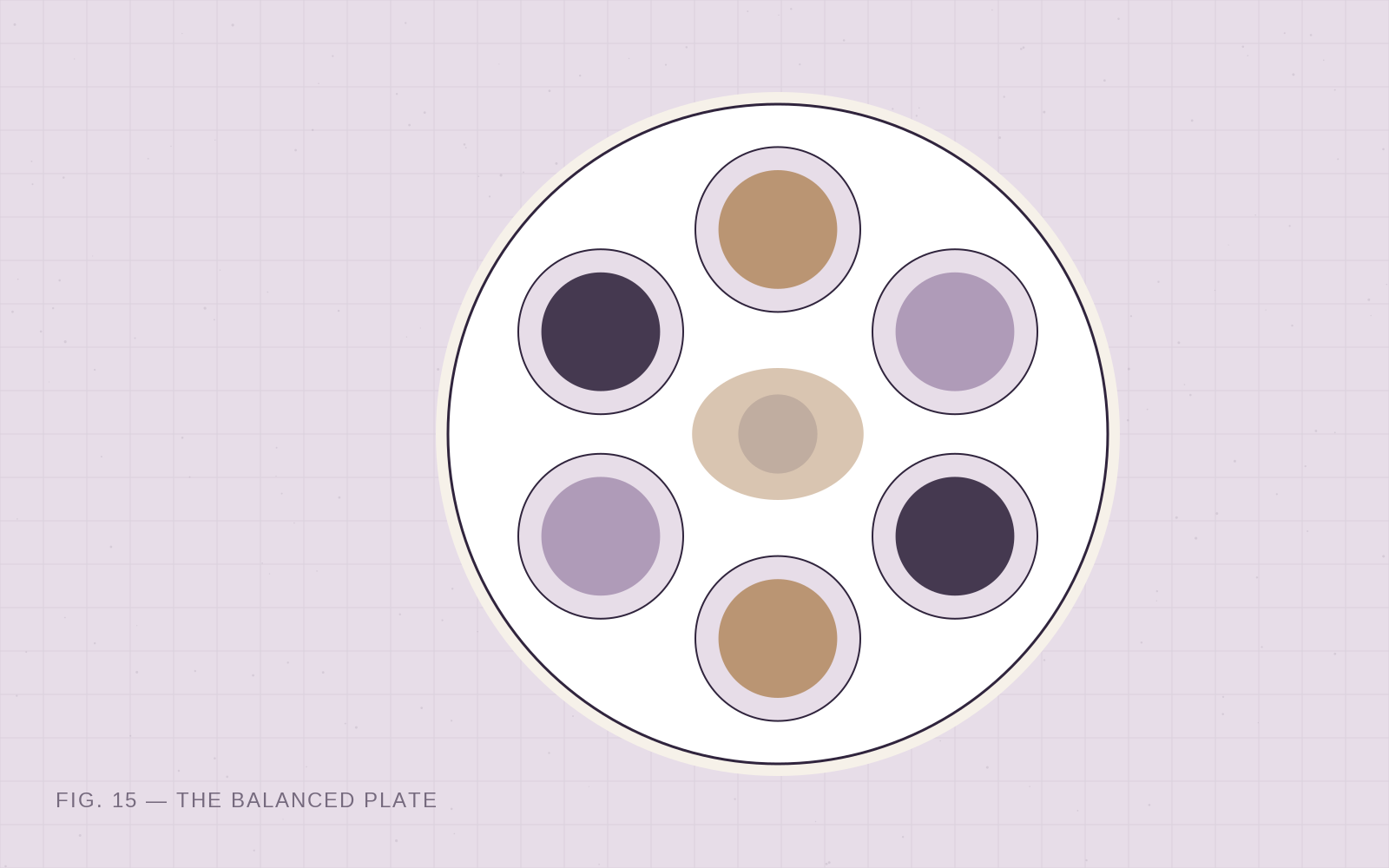
This template mirrors the balanced plate described in What does a balanced diet look like? — about half vegetables, a quarter grains, a quarter protein.
Plan in three steps
- Check your week. Which evenings are busiest? Who’s eating at home? Plan quick meals for the hardest nights and leftovers for the night after a bigger cook.
- Choose 3–4 dinners, not seven. Plan to eat one or two twice, and leave one night for leftovers or flexibility.
- Write the shopping list from the plan, grouped by section (vegetables, staples, dairy, protein), after checking what’s already at home.
Grocery planning
A well-stocked kitchen makes planning much easier. Keep three tiers:
| Tier | What it holds | Examples |
|---|---|---|
| Pantry staples | Long-lasting basics, replenished monthly | Rice, atta, millets, oats, poha, dals and whole pulses, besan, soy chunks, peanuts, spices, oils |
| Weekly fresh | Bought to the plan | Seasonal vegetables, leafy greens, fruit, curd, milk, paneer, eggs, herbs |
| Backup shelf | Fast rescue meals | Frozen peas, spinach and mixed vegetables; canned chickpeas or beans; eggs; instant oats; frozen whole wheat parathas with simple ingredients |
Meal prep: components, not complete meals
You don’t have to cook every meal on Sunday. Preparing components gives flexibility through the week. In 60–90 minutes you can:
- Soak and pressure-cook a large batch of dal or beans — plain dal can become tadka dal, sambar or dal palak on different days; cooked chana can go into a curry, a salad or a chaat.
- Wash and chop vegetables — onions, beans, carrots, cabbage, capsicum; store in airtight containers.
- Cook a grain — millets or brown rice keep well; cool quickly and refrigerate.
- Make a base masala — onion-tomato-ginger-garlic base for quick curries.
- Prepare one fresh element — mint-coriander chutney, sprouts or a raita base.
- Portion snacks — roasted chana, nuts and fruit for the week.
Protein, vegetables and whole grains: easy wins
Protein: plan one protein per dinner and rotate types across the week: a dal night, a bean or chana night, a paneer or tofu night, an egg night, and fish or chicken if you eat them. Our protein guide explains how much people generally need.
Vegetables: aim for vegetables at lunch and dinner. Frozen vegetables count, and they’re picked and frozen quickly, so they retain nutrients well. Adding a handful of spinach or peas to dal, poha or upma is the easiest upgrade.
Whole grains: mix rather than switch — half brown and half white rice, atta with some jowar or ragi, or millets once or twice a week. See Millets explained.
Snacks
Plan snacks the way you plan meals, so you aren’t relying on whatever’s nearby at 5 pm. Useful options: fruit, roasted chana, makhana, peanuts or other nuts, sprouts chaat, curd or buttermilk, boiled eggs, vegetable sticks with hummus.
Time-saving techniques
- Pressure cooker or electric multi-cooker for dal, beans, rice and millets in minutes.
- One-pot meals — khichdi, vegetable pulao with chana, dal-vegetable stew.
- Cook once, eat twice — make double dinner and pack the second portion for lunch.
- Sheet-pan roasting — vegetables and paneer, tofu or chicken in the oven while you do something else.
- Prepped dosa or idli batter — fermented at home, it lasts several days in the fridge.
- Theme nights — “dal night”, “egg night” — reduce decision fatigue.
Does cooking or microwaving destroy nutrients?
All cooking changes food, and some nutrients are more sensitive than others. Understanding the patterns helps you choose methods without worrying.
- Water-soluble vitamins — vitamin C, folate and several B vitamins — are the most vulnerable. They’re lost mainly through heat, time and water: long boiling and discarding the water removes the most.
- Steaming, microwaving, pressure cooking and quick stir-frying generally retain these vitamins well, because they use short cooking times and little water. Microwaving vegetables with a splash of water is often one of the gentler methods.
- Some nutrients become more available after cooking. Carotenoids such as beta-carotene in carrots and lycopene in tomatoes are absorbed better from cooked food, especially with a little fat.
- Cooking makes pulses and grains digestible. It breaks down starch and proteins and reduces some anti-nutrients.
- Minerals aren’t destroyed by heat, though some leach into cooking water. Using the water — as in dal or sambar — keeps them.
Safe storage and reheating
Batch cooking works only if food is stored safely.
- Cool quickly. Spread food out in shallow containers and refrigerate promptly. US food-safety guidance says refrigerate cooked food within two hours (within one hour if it’s very hot outside).
- Use leftovers within 3–4 days from the fridge, or freeze them.
- Rice needs extra care. Spores of the bacterium Bacillus cereus can survive cooking and produce toxins if cooked rice is left at room temperature. UK food safety guidance advises chilling cooked rice as quickly as possible (ideally within an hour), storing it in the fridge for no more than 24 hours, and reheating it only once, until steaming hot.
- Reheat thoroughly until steaming hot throughout.
- Label containers with the date.
Budgeting
Planning is one of the most effective ways to spend less on food: you buy what you need, waste less and rely less on expensive convenience foods. Our healthy eating on a budget guide goes further.
Sample 5-day planning framework
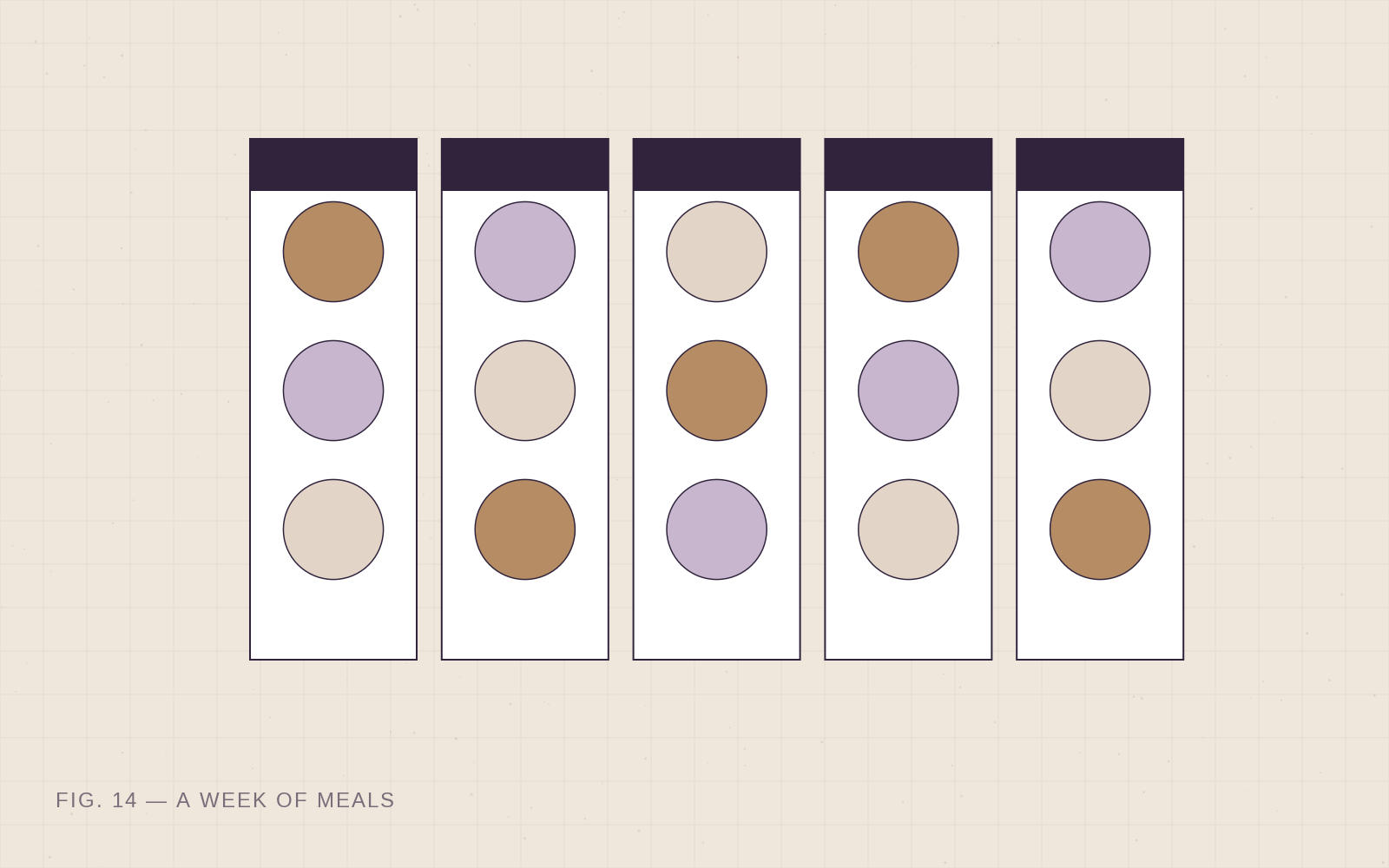
A template, not a prescription — swap in your family’s favourite dishes. Weekend prep: cook a large batch of chana and toor dal, chop vegetables, cook millets, make green chutney.
| Day | Breakfast | Lunch (packed) | Dinner |
|---|---|---|---|
| Monday | Vegetable poha with peanuts | Chana salad with cucumber, tomato and millets | Toor dal tadka, rice, cabbage sabzi, curd |
| Tuesday | Besan chilla with chutney | Leftover dal-rice with salad | Paneer–peas bhurji, rotis, kachumber |
| Wednesday | Oats with milk, banana and nuts | Paneer bhurji roll in whole wheat roti | Chana masala, jowar bhakri, stir-fried beans |
| Thursday | Idli with sambar (batter made Sunday) | Chana masala with rice | Vegetable khichdi with curd and papad (one) |
| Friday | Egg or tofu bhurji, toast, fruit | Leftover khichdi with raita | Fish curry or rajma, rice, spinach sabzi |
Frequently asked questions
How long does it take to meal plan?
Planning and writing a shopping list typically takes 15–20 minutes once you’re used to it. Prep sessions take 60–90 minutes, but save time across the week.
How long can cooked dal last in the fridge?
As a general rule, cooked dishes kept in the fridge should be eaten within 3–4 days. Cool dal quickly before refrigerating and reheat until steaming hot.
Is frozen food less healthy?
No. Frozen vegetables and fruit are usually frozen soon after harvest and retain nutrients well — sometimes better than “fresh” produce that has spent days in transport and storage. Check that there’s no added salt, sugar or sauce.
What if my plan falls apart mid-week?
Expect it sometimes. That’s what the backup shelf is for: an egg bhurji, frozen-vegetable upma or khichdi takes 15–20 minutes.
Is reheating food in the microwave safe?
Yes, if food is reheated until steaming hot throughout. Stir partway through, because microwaves heat unevenly, and use microwave-safe containers.
Try the related tools
Key terms in this guide
Sources and references
We link to original research, official guidance and authoritative reviews. Read more about how we evaluate evidence.
- Leftovers and Food Safety. USDA Food Safety and Inspection Service
- Rice — food safety at home. Food Standards Scotland
- Microwave cooking and nutrition. Harvard Health Publishing
- Healthy Eating on a Budget. USDA MyPlate
- Dietary Guidelines for Indians (2024). ICMR-National Institute of Nutrition
- Healthy diet — fact sheet. World Health Organization
How to cite this guide
NourishDecoded Editorial Team. “How to Plan Balanced Meals for a Busy Week.” NourishDecoded. Published 22 November 2026; updated 22 November 2026. https://nourishdecoded.com/healthy-eating/meal-planning-busy-week/