In a nutshell
- Protein is made of amino acids; nine are essential and must come from food.
- The RDA for healthy adults is about 0.8 g/kg/day (US National Academies) — 0.83 g/kg in ICMR-NIN’s 2020 report.
- Higher intakes are often suggested for older adults (1.0–1.2 g/kg) and people doing regular training (1.2–2.0 g/kg).
- Vegetarians can meet needs with pulses, dairy, soy, nuts and seeds; combining cereals and pulses improves protein quality.
- Spreading protein across meals helps; very high intakes aren’t necessary for most people and aren’t suitable for everyone.
What protein is
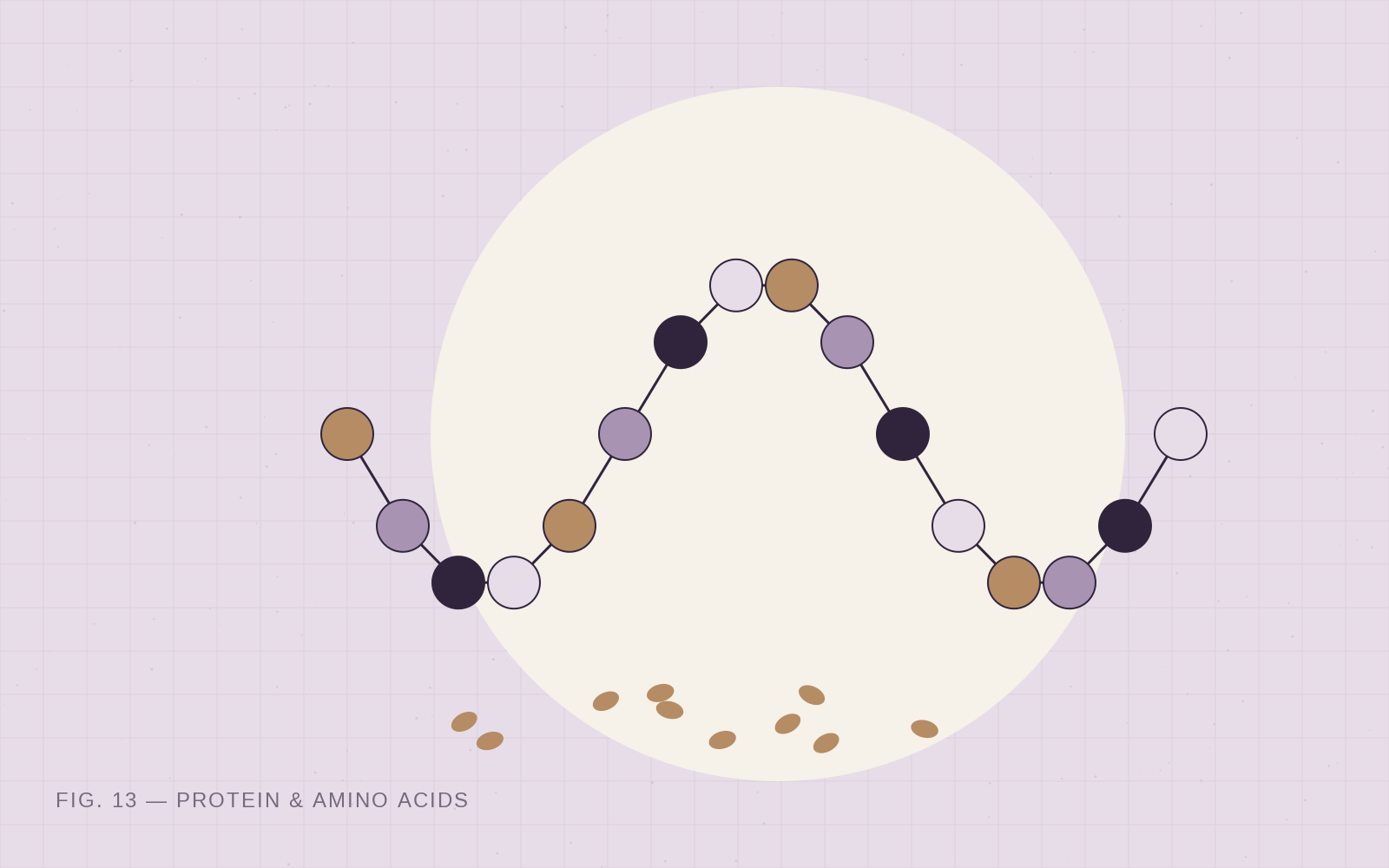
Protein is one of the three macronutrients. Every protein is a chain of smaller units called amino acids, folded into a specific shape that determines what it does.
The body uses about 20 different amino acids. Nine are essential (histidine, isoleucine, leucine, lysine, methionine, phenylalanine, threonine, tryptophan and valine): we can’t make them, so they must come from food. The others can be made from other compounds when needed.
When you eat protein, digestion breaks it down into amino acids and small peptides, which are absorbed and reassembled into the proteins your body needs. Unlike fat and carbohydrate, the body has no dedicated storage depot for protein — which is one reason regular intake matters.
What protein does
- Structure: muscle, bone matrix, skin, hair, nails, tendons and connective tissue.
- Enzymes: proteins that speed up thousands of chemical reactions, including digestion.
- Immune defence: antibodies are proteins.
- Transport and storage: haemoglobin carries oxygen; other proteins carry iron, vitamins and fats.
- Signalling: some hormones, such as insulin, are proteins.
- Energy: protein provides about 4 kcal per gram and can be used for fuel, especially when energy intake is low.
The body is constantly breaking down and rebuilding proteins — a process called protein turnover. Dietary protein supplies the amino acids to keep that cycle in balance.
How protein requirements are estimated
Protein requirements are based mainly on nitrogen balance studies: because protein is the body’s main source of nitrogen, researchers measure the amount of protein needed to balance nitrogen intake against losses in healthy adults. Statistical adjustments then give two key numbers:
- The Estimated Average Requirement (EAR) — enough for half of healthy adults.
- The Recommended Dietary Allowance (RDA) — set higher, to cover nearly all (about 97.5%) healthy adults.
| Reference | Adult RDA / safe level |
|---|---|
| US National Academies (DRIs) | 0.8 g per kg body weight per day |
| WHO/FAO/UNU (2007) | 0.83 g/kg/day of good-quality protein |
| ICMR-NIN, India (2020) | 0.83 g/kg/day |
So a healthy 60 kg adult would have an RDA of roughly 48–50 g of protein a day; a 75 kg adult, about 60–62 g.
The RDA is designed to prevent deficiency in healthy adults. Researchers debate whether somewhat higher intakes are beneficial for some people — particularly older adults and people who exercise — which is why other recommendations exist alongside it.
Factors that influence protein needs
| Factor | How it affects needs | Typical suggested range |
|---|---|---|
| Healthy, mostly sedentary adults | Baseline | ~0.8 g/kg/day |
| Older adults (65+) | Muscle becomes less responsive to protein; risk of muscle loss rises | 1.0–1.2 g/kg/day (PROT-AGE) |
| Regular endurance or mixed training | Repair and adaptation | 1.2–2.0 g/kg/day across athletes (joint ACSM/AND/DC position) |
| Regular strength training | Building and maintaining muscle | 1.4–2.0 g/kg/day (ISSN); gains plateau around ~1.6 g/kg in a 2018 meta-analysis |
| Pregnancy and breastfeeding | Growth of baby, placenta and milk production | Additional protein, set by national reference values |
| Illness, injury, surgery | Higher needs for healing in many cases | Individual — clinical advice |
| Chronic kidney disease | Often lower intakes are advised | Individual — clinical advice |
Our protein calculator uses these ranges to estimate a general daily range from your body weight.
Sources of protein
Vegetarian and plant protein sources
Approximate protein per typical portion. Values vary by brand, variety and preparation.
| Food | Typical portion | Approx. protein |
|---|---|---|
| Cooked dal or lentils | 1 katori (~150 g cooked) | 9–12 g |
| Cooked rajma or chana | 1 katori (~150 g) | 10–13 g |
| Paneer | 100 g | 18–20 g |
| Tofu (firm) | 100 g | 12–16 g |
| Soy chunks (dry) | 30 g | ~15 g |
| Curd / dahi | 1 cup (~200 g) | 6–8 g |
| Greek-style or hung curd | 150 g | 12–15 g |
| Milk | 1 glass (~250 ml) | ~8 g |
| Roasted chana | 30 g | ~6 g |
| Peanuts | 30 g | ~7–8 g |
| Almonds | 30 g | ~6 g |
| Besan chilla (2 small) | ~50 g besan | ~10–11 g |
| Sprouted moong | 1 cup (~100 g) | ~3–4 g (raw sprouts are high in water) |
| Whole wheat roti | 1 medium | ~3 g |
| Cooked rice | 1 cup | ~4 g |
Animal sources
| Food | Typical portion | Approx. protein |
|---|---|---|
| Egg | 1 large | ~6 g |
| Chicken breast (cooked) | 100 g | ~30 g |
| Fish (cooked) | 100 g | ~20–25 g |
| Mutton (cooked, lean) | 100 g | ~25 g |
Protein quality
Not all proteins are equal in how well they meet the body’s needs. Quality depends on:
- Amino acid composition — whether all essential amino acids are present in sufficient amounts.
- Digestibility — how much is absorbed.
Methods such as PDCAAS and the newer DIAAS score proteins on both. Eggs, milk, meat, fish and soy score highly. Most cereals are limited in lysine; most pulses are limited in methionine.
That’s why cereal–pulse combinations — dal with rice, rajma with roti, idli and dosa from rice and urad dal, khichdi — are so effective: each fills the other’s gap. You don’t need to combine them at the same meal; variety over the day is enough for adults.
Distributing protein across meals
Research on muscle protein synthesis suggests that spreading protein across the day — rather than eating most of it at dinner — may be more effective for maintaining muscle, especially in older adults. Sports nutrition researchers have suggested around 0.4 g/kg per meal across at least four meals for people aiming to maximise muscle gain; for most people, the practical message is simpler: include a protein food at every meal.
| Meal | Low-protein version | Protein-boosted version |
|---|---|---|
| Breakfast | Plain poha with tea | Poha with peanuts and a glass of milk, or besan chilla with curd |
| Lunch | Rice with thin dal | Rice with a full katori of dal, a sabzi with chana, curd |
| Snack | Biscuits | Roasted chana, a boiled egg or buttermilk |
| Dinner | Two rotis with potato sabzi | Rotis with paneer–peas or rajma, salad |
Protein myths
“Vegetarians can’t get enough protein.” Well-planned vegetarian diets with pulses, dairy, soy, nuts and seeds can meet protein needs. Planning matters if diets are very cereal-heavy.
“You need protein powder to build muscle.” Training drives muscle growth; protein supports it. Food can meet needs for most people. Supplements are a convenience, not a requirement. ICMR-NIN’s 2024 guidelines caution against prolonged intake of large amounts of protein powders.
“High-protein diets damage healthy kidneys.” Current evidence doesn’t show harm to kidneys in healthy people at intakes common among athletes, but people with existing kidney disease need medical guidance on protein.
“The body can only absorb 30 g of protein at once.” The body absorbs nearly all protein eaten; the question researchers debate is how much is used for muscle building at a time, which depends on the meal, the person and their training.
When professional advice matters
Talk to a doctor or registered dietitian before significantly changing protein intake if you:
- have kidney or liver disease, or diabetes with kidney complications;
- are pregnant or breastfeeding;
- are recovering from surgery, serious illness or significant weight loss;
- are an older adult with poor appetite or unintentional weight loss;
- are considering supplements alongside medicines.
Frequently asked questions
How much protein do I need per day?
For healthy adults, the RDA is about 0.8 g per kg of body weight per day (0.83 g/kg in Indian reference values). A 60 kg adult needs roughly 48–50 g. Older adults and people who train regularly may benefit from more. Try our protein calculator for a general estimate.
Is it possible to get enough protein as a vegetarian in India?
Yes. Include pulses at most meals, use dairy (curd, milk, paneer) if you eat it, add soy, chana, peanuts and other nuts and seeds, and avoid diets built almost entirely on cereals.
Which dal has the most protein?
Most dals provide broadly similar protein per gram of dry weight (roughly 20–25 g per 100 g dry). Soybeans are notably higher. The portion you eat matters more than the type.
Is egg protein better than plant protein?
Egg protein has excellent quality scores, but combining plant proteins across the day provides all essential amino acids too. Both can be part of a balanced diet.
When should I eat protein after exercise?
Eating a protein-containing meal within a few hours after training is sensible. Total daily protein and consistent training matter more than precise timing for most people.
Can too much protein be harmful?
In healthy people, moderately high protein intakes appear safe, but there’s little benefit from very high intakes. People with kidney disease or certain metabolic conditions should follow medical advice.
Try the related tools
Key terms in this guide
Sources and references
We link to original research, official guidance and authoritative reviews. Read more about how we evaluate evidence.
- A Brief Note on Nutrient Requirements for Indians, the RDA and EAR. ICMR-National Institute of Nutrition (2020)
- Dietary Reference Intakes for Energy, Carbohydrate, Fiber, Fat, Fatty Acids, Cholesterol, Protein, and Amino Acids. National Academies Press (2005)
- Protein and amino acid requirements in human nutrition (WHO Technical Report Series 935). WHO/FAO/UNU (2007)
- Evidence-based recommendations for optimal dietary protein intake in older people: a position paper from the PROT-AGE Study Group. Bauer J et al., JAMDA (2013)
- Nutrition and Athletic Performance (joint position statement). Thomas DT, Erdman KA, Burke LM, J Acad Nutr Diet (2016)
- International Society of Sports Nutrition Position Stand: protein and exercise. Jäger R et al., JISSN (2017)
- A systematic review, meta-analysis and meta-regression of the effect of protein supplementation on resistance training-induced gains in muscle mass and strength. Morton RW et al., British Journal of Sports Medicine (2018)
- How much protein can the body use in a single meal for muscle-building?. Schoenfeld BJ, Aragon AA, JISSN (2018)
- Dietary Guidelines for Indians (2024). ICMR-National Institute of Nutrition
How to cite this guide
NourishDecoded Editorial Team. “Protein Explained: How Much Do Adults Need and Where Can They Get It?.” NourishDecoded. Published 22 November 2026; updated 22 November 2026. https://nourishdecoded.com/nutrition-basics/protein-guide/