In a nutshell
- Balance means variety across food groups, enough energy and nutrients, and limits on salt, free sugars and unhealthy fats.
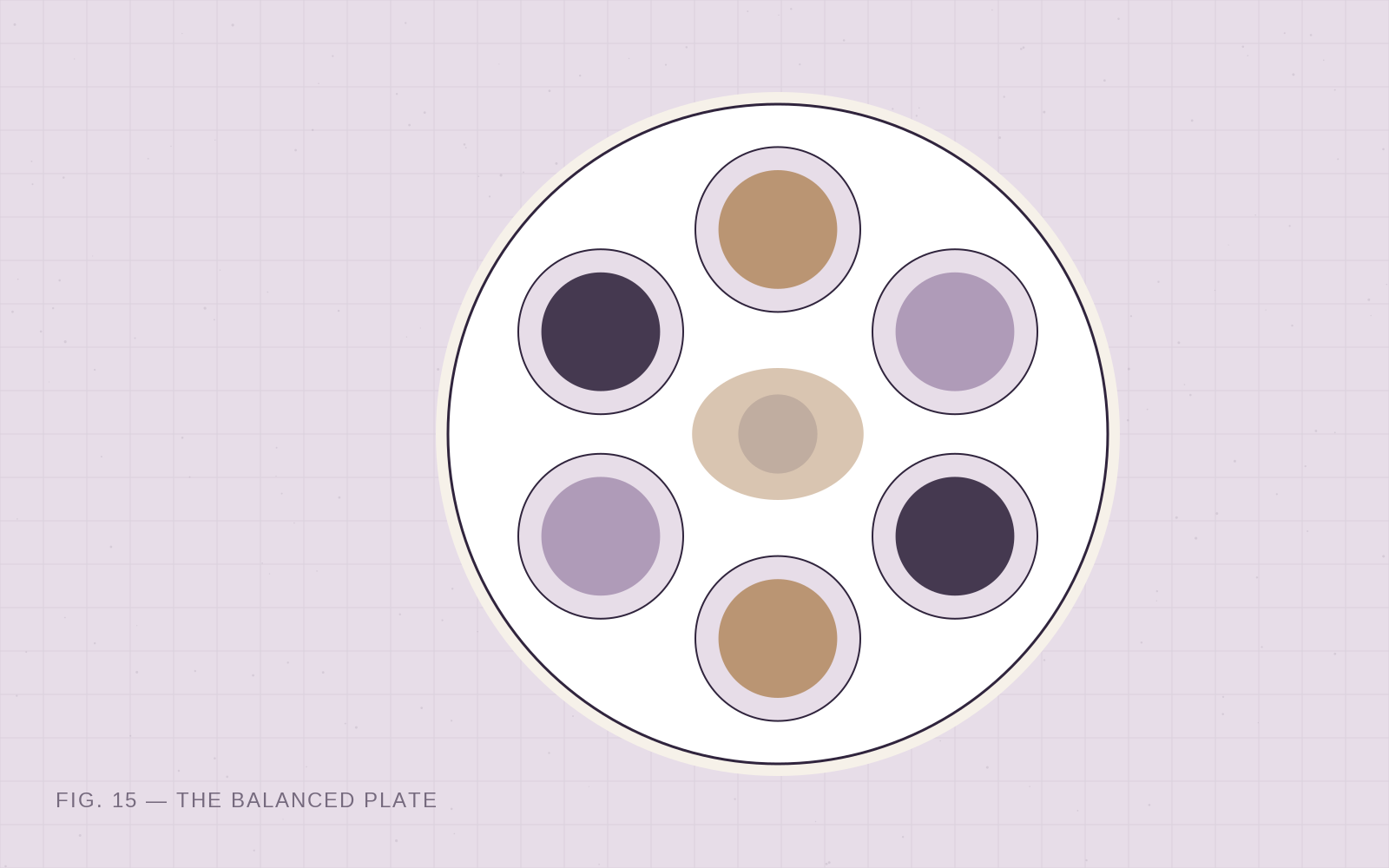
- A useful plate model: about half vegetables and fruit, a quarter whole grains or millets, a quarter protein foods, with a little healthy fat.
- WHO suggests at least 400 g of vegetables and fruit a day, free sugars below 10% of energy and less than 5 g of salt.
- An Indian thali can be naturally balanced: dal, sabzi, salad, roti or rice, curd — the proportions matter.
- Balance happens over days and weeks, not every single meal; flexibility makes it sustainable.
The principles of a balanced diet
Public-health guidance from different countries looks different on the surface — plates, pyramids, thalis — but the core principles are remarkably consistent:
- Variety. Eat from all major food groups, and vary choices within them.
- Plants at the centre. Vegetables, fruit, pulses, whole grains, millets, nuts and seeds make up most of the diet.
- Enough protein. Include a protein-rich food at most meals.
- Healthier fats. Use unsaturated oils in moderate amounts; limit saturated fat and avoid industrial trans fat.
- Limits. Keep salt, free sugars and highly processed foods high in fat, sugar and salt to a minimum.
- Water first. Make water the main drink.
The World Health Organization puts numbers on some of these. For adults, it recommends at least 400 g (five portions) of vegetables and fruit a day, free sugars below 10% of energy (ideally below 5%), total fat below about 30% of energy with a shift towards unsaturated fats, and less than 5 g of salt a day.
Macronutrients and micronutrients in balance
A balanced diet provides enough energy from carbohydrate, protein and fat, in proportions that suit your needs (see Macronutrients explained). It also provides the vitamins and minerals that come mainly from variety: iron and folate from leafy greens and pulses, calcium from dairy and ragi, vitamin C from fruit and vegetables, B12 from dairy, eggs and animal foods.
You don’t need to plan for every micronutrient individually. Eating a range of different coloured vegetables and fruits, a variety of pulses and grains, and including dairy or alternatives, eggs, fish or meat if you eat them, covers most needs for most healthy people.
The food groups
| Food group | What it provides | Everyday examples |
|---|---|---|
| Vegetables (including green leafy vegetables) | Fibre, vitamins A, C, K, folate, potassium, plant compounds | Palak, methi, cabbage, bhindi, carrots, beans, tomatoes, gourds |
| Fruits | Fibre, vitamin C, potassium | Guava, banana, papaya, orange, apple, mango, seasonal fruit |
| Cereals, millets and whole grains | Energy, fibre, B vitamins, some minerals | Atta, rice, ragi, jowar, bajra, oats, poha, barley |
| Pulses, legumes, eggs, fish and meat | Protein, iron, zinc, fibre (pulses), B12 (animal foods) | Dal, rajma, chana, soy, eggs, fish, chicken |
| Milk and dairy (or alternatives) | Protein, calcium, B12 | Milk, curd, buttermilk, paneer |
| Nuts and seeds | Healthy fats, protein, vitamin E, minerals | Peanuts, almonds, walnuts, flaxseed, sesame |
| Fats and oils | Energy, essential fatty acids, fat-soluble vitamin absorption | Mustard, groundnut, sesame, rice bran oils; small amounts of ghee |
ICMR-NIN’s 2024 Dietary Guidelines for Indians recommend sourcing nutrients from a wide range of food groups, with vegetables and fruits making up a large share of the plate, and a smaller share of cereals than is typical in many Indian diets.
A simple plate model
Plate models translate guidelines into something you can see. Harvard’s Healthy Eating Plate and the UK’s Eatwell Guide differ in details but share a structure:
- About half the plate: vegetables and fruit (potatoes count as starch rather than vegetable in Harvard’s model).
- About a quarter: whole grains, millets or other starchy foods.
- About a quarter: protein foods — pulses, eggs, fish, poultry, paneer, tofu.
- A little: healthy oils.
- To drink: water; limited milk or curd as part of the meal; few sugary drinks.
The Indian thali: balanced by design
A traditional thali can be an excellent balanced meal because it brings several food groups together. The proportions are what make the difference.
| Component | Food group | Balanced-plate tip |
|---|---|---|
| Dal, sambar, rajma or chana | Protein, fibre | A generous katori; whole pulses add more fibre |
| One or two sabzis | Vegetables | Fill a large share of the plate; include a green leafy vegetable often |
| Salad (kachumber, sprouts) | Vegetables, fibre | Add raw vegetables for crunch and volume |
| Roti, rice, bhakri or millet | Cereals and millets | A moderate portion; mix in whole wheat, millets or brown rice |
| Curd, raita or buttermilk | Dairy, protein, calcium | Plain rather than sweetened |
| Pickle, papad, chutney | Flavour | Small amounts — often high in salt |
| Sweet | Treat | Occasional, small portion |
Meal examples
Vegetarian
- Breakfast: vegetable poha with peanuts and a glass of milk; or besan chilla with mint chutney and curd; or idli–sambar with a fruit.
- Lunch: jowar roti, palak dal, mixed vegetable sabzi, cucumber raita.
- Dinner: brown or white rice with rajma, stir-fried beans, salad.
- Snacks: roasted chana, fruit, a small handful of nuts, buttermilk.
Including eggs, fish or meat
- Breakfast: vegetable omelette with whole wheat toast and fruit.
- Lunch: fish curry with rice and a large serving of vegetable thoran or poriyal.
- Dinner: chicken and vegetable stir-fry with millet or roti and dal.
Global examples
- Mediterranean-style: wholegrain bread, a big salad with olive oil, beans or lentils, grilled fish, fruit.
- East Asian–style: rice with tofu or fish, plenty of vegetables, miso or clear soup (watch the salt).
- Latin American–style: beans, corn tortillas, salsa, avocado, grilled chicken or eggs.
Different cuisines, same pattern: plants first, protein included, starchy foods in proportion, moderate fat.
Flexible eating
A balanced diet isn’t a perfect diet. Rigid rules tend to backfire and can take the pleasure and culture out of food. A few principles make balance easier to sustain:
- Think in days and weeks, not single meals. A festive meal or a busy day of convenience food doesn’t undo a generally balanced pattern.
- Add before you subtract. Adding vegetables, pulses or fruit to what you already eat is often easier than cutting foods out.
- Keep favourite foods. Sweets, fried snacks and restaurant meals can fit; the question is how often and how much.
- Adjust for your needs. Pregnancy, older age, high activity or medical conditions change requirements — individual advice helps.
Budget considerations
Balanced eating doesn’t require expensive “health foods”. Dal, seasonal vegetables, local fruit, eggs, curd, millets, peanuts and frozen vegetables are among the most nutritious and affordable foods available. Read our full guide to healthy eating on a budget.
Common balanced-diet mistakes
- Large cereal portions with small dal and few vegetables. Many Indian meals are built mostly from rice or rotis. Keeping the grain portion moderate and increasing dal and vegetables shifts the balance without changing the cuisine.
- Forgetting protein at breakfast. Tea with biscuits or plain toast provides little protein. Adding milk, curd, eggs, besan, peanuts or sprouts helps.
- Drinking sugar. Sweetened tea and coffee, packaged juices and soft drinks add free sugars quickly. Gradually reducing sugar in tea and choosing water or buttermilk makes a big difference over a year.
- Heavy-handed oil and salt. Measuring oil with a spoon rather than pouring, and adding salt at the end rather than at several stages, reduces both without sacrificing flavour.
- Relying on “health” products. Multigrain biscuits, diet namkeen and “protein” bars aren’t substitutes for simple foods. Check labels with our food label guide.
- All-or-nothing thinking. Skipping vegetables for a day because a meal “wasn’t healthy anyway” is common. The next meal is always a fresh start.
Frequently asked questions
What are the main components of a balanced diet?
Vegetables and fruit, whole grains or millets, protein foods (pulses, eggs, fish, meat, dairy, soy), healthy fats in moderation, and water — with limited salt, added sugar and highly processed foods.
How many meals a day should I eat?
There’s no single right number. Two, three or more meals can all be balanced. What matters most is the overall quality and quantity of food across the day, and a pattern that suits your schedule and appetite.
Is rice unhealthy compared with roti?
Neither is unhealthy. Both can be part of a balanced meal. Whole-grain versions — brown or hand-pounded rice, whole wheat roti, millets — provide more fibre. Portion and what you eat alongside matter more than the choice between them.
Can a vegetarian diet be balanced?
Yes. Well-planned vegetarian diets with pulses, dairy, nuts, seeds, whole grains, vegetables and fruit can meet most needs. Vitamin B12 deserves attention, especially on a vegan diet, and iron and protein need planning.
Do I need supplements if I eat a balanced diet?
Most healthy people can meet most nutrient needs from a varied diet. Some groups — such as people who are pregnant, older adults, vegans, and people with low sun exposure or specific deficiencies — may need particular supplements, best decided with a clinician.
Try the related tools
Key terms in this guide
Sources and references
We link to original research, official guidance and authoritative reviews. Read more about how we evaluate evidence.
- Healthy diet — fact sheet. World Health Organization
- Dietary Guidelines for Indians (2024). ICMR-National Institute of Nutrition
- Healthy Eating Plate. Harvard T.H. Chan School of Public Health, The Nutrition Source
- The Eatwell Guide. NHS
- Eating a balanced diet. NHS
- Carbohydrate intake for adults and children: WHO guideline. World Health Organization (2023)
How to cite this guide
NourishDecoded Editorial Team. “What Does a Balanced Diet Look Like in Everyday Life?.” NourishDecoded. Published 22 November 2026; updated 22 November 2026. https://nourishdecoded.com/healthy-eating/balanced-diet/